
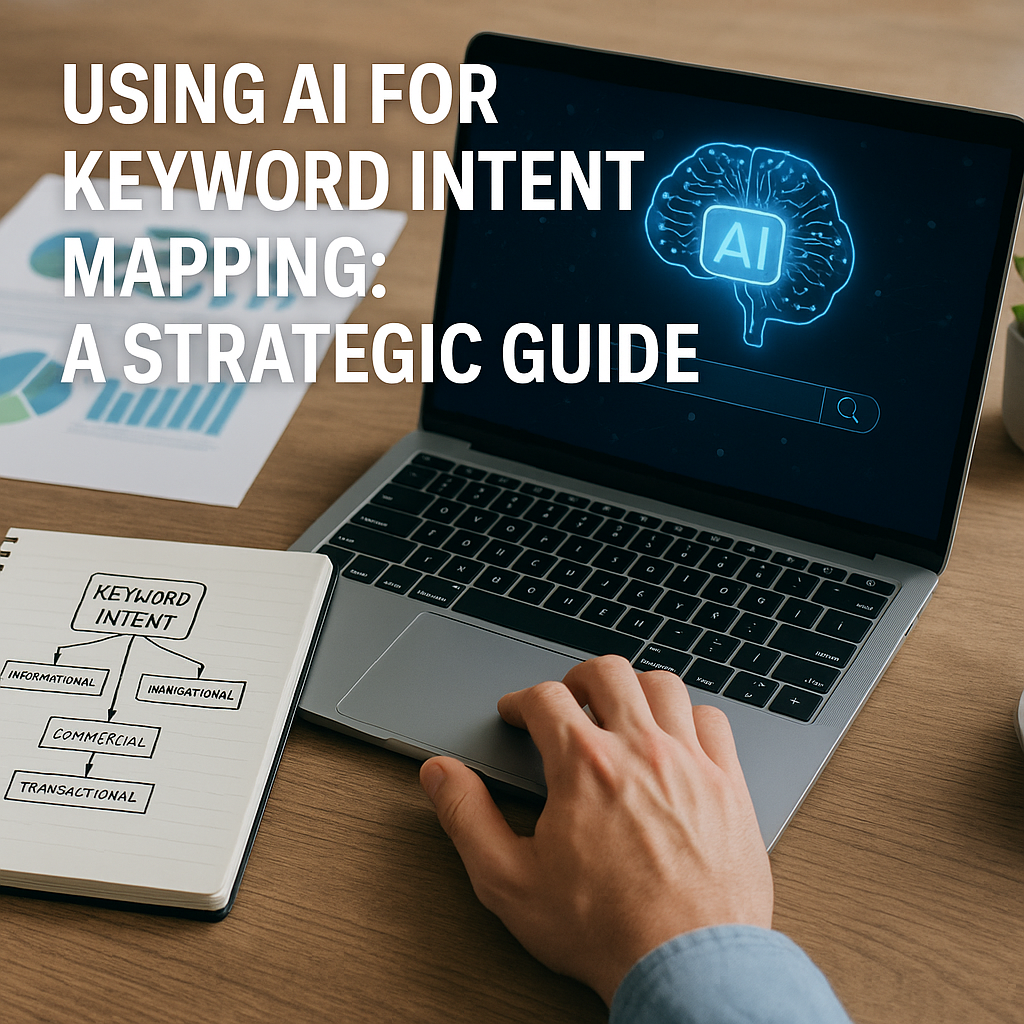
- Shift to Semantic Search: Modern SEO has moved from simple keyword matching to “predictive semantic satisfaction,” using AI and vector-space modeling to prioritize the contextual meaning and behavioral purpose behind queries.
- Micro-Intent & Journey Mapping: Success requires aligning content with specific user journey stages (Informational, Consideration, Transactional) by targeting granular “micro-intents” rather than broad topics to increase conversion rates.
- Entity-Based Authority: Building “topic clusters” and hierarchical silos around interconnected entities—rather than isolated keywords—strengthens E-E-A-T signals and improves ranking stability against algorithmic updates.
- Optimization for Generative AI: To capture high-intent traffic in an AI-driven landscape, content must be structured for LLM ingestion through high information density, direct answers, and clear schema markup.
Table of Contents
- 1. Semantic Search and Intent Mapping
- 2. User Journey Stages and Micro-Intent Alignment
- 3. Competitor Gap Analysis and Variance Approach
- 4. Entity-Based Content Structuring
- 5. Impact of AI on Search Intent
- 6. Content Architecture for Topical Authority
- 7. Semantic Entity Relationships and Knowledge Graph
- The Evolution of Search Intent in Modern SEO
- Mapping Keywords to the User Journey
- AI and the Shift to Vector-Space Modeling
- Content Architecture for Topical Authority
- Actionable Steps for AI-Driven Intent Mapping
- Frequently Asked Questions
- Strategic Summary
- 1. Master Semantic Search and Intent Mapping
- 2. Align with User Journey Stages and Micro-Intents
- 3. Conduct Competitor Gap Analysis via Variance Approach
- 4. Implement Entity-Based Content Structuring
- 5. Optimize for the Impact of AI on Search Intent
- 6. Build Content Architecture for Topical Authority
- 7. Leverage Semantic Entity Relationships and Knowledge Graph
- Summary
Search engines no longer rank pages based on simple string matching. Instead, they rank them based on predictive semantic satisfaction. In this landscape, keyword intent mapping is the foundational architecture that dictates whether a page thrives as a definitive resource or languishes in the algorithmic abyss.
By aligning content with the precise stage of the user journey, businesses can ensure their digital presence matches the psychological and functional needs of the searcher. Modern search engine optimization requires moving beyond surface-level queries to understand the behavioral purpose behind every click.
1. Semantic Search and Intent Mapping
Definition: Semantic search is the sophisticated process of identifying the contextual meaning behind a search query rather than focusing solely on individual keywords. By leveraging probabilistic models and vector space modeling, search engines analyze the relationship between words to determine true intent. This shift from lexical matching to conceptual understanding allows algorithms to deliver highly accurate results based on user behavior and topical relevance.
Benefit: Aligning content with semantic intent can improve relevance scores by up to 50 percent, significantly boosting organic visibility. This strategic approach ensures your content remains resilient against algorithmic updates that frequently penalize thin, keyword-stuffed, or mismatched information. By providing comprehensive depth, you establish topical authority that search engines trust. Understanding Semantic Search is crucial in this context.
Example: Instead of merely targeting the high-volume phrase “buy shoes,” semantic search recognizes that a user searching for “best marathon footwear” requires an in-depth comparison guide rather than a simple product landing page. You should utilize advanced data science SEO tools to analyze how Google clusters these related concepts to better satisfy specific user needs.
2. User Journey Stages and Micro-Intent Alignment
Definition: Mapping keywords to specific phases involves categorizing search terms into informational, consideration, and transactional buckets using micro-intents. Unlike broad categories, micro-intents identify the granular “why” behind a query, allowing you to align content with the user’s immediate psychological state and specific informational needs.
Benefit: Replacing generic informational pages with targeted micro-intent pages significantly increases conversion rates by providing exact solutions. This precision reduces architectural weakness in your content strategy by systematically filling gaps in the sales funnel. By addressing every niche question, you establish topical authority and prevent potential leads from bouncing to competitors who offer more specific answers.
Example: A user in the “consideration” stage might search for “SaaS vs. on-premise cost-benefit.” Providing a detailed technical comparison with a downloadable ROI calculator meets the search quality guidelines for helpfulness and expertise. To act on this, audit your user journey to ensure every identified micro-intent has a dedicated, high-quality landing page.
3. Competitor Gap Analysis and Variance Approach
Benefit: Implementing this data-driven framework results in a 40 percent higher likelihood of ranking for high-value queries. It uncovers nuanced keyword intent mapping opportunities—such as transitional intent or post-purchase queries—that standard competitor gap analysis tools often overlook, giving you a distinct first-mover advantage.
4. Entity-Based Content Structuring
Definition: This strategy involves organizing digital content around interconnected entity-based SEO nodes rather than targeting isolated, high-volume keywords. By mapping out specific concepts, people, and places, brands can establish undeniable topical authority within their niche. This method aligns with how modern search engines interpret the “intent” behind a query by connecting related data points into a cohesive knowledge map.
Benefit: Shifting to entity-based SEO significantly increases SEO rankings stability against frequent algorithm updates. Research indicates that optimizing for semantic entity nodes can improve ranking authority by 2.5 times in competitive Tier 1 markets, such as the United States, United Kingdom, and Canada. This approach ensures your content remains relevant as search engines move toward understanding “things, not strings.”
Example: If your core entity is “Artificial Intelligence,” your sub-entities should include generative AI models, neural networks, and machine learning. To maximize visibility, structure your site using W3C standards and Schema markup, which helps the Google Knowledge Graph instantly categorize these complex relationships.
5. Impact of AI on Search Intent
Definition: Generative Engine Optimization (GEO) involves tailoring digital assets specifically for generative AI models and conversational interfaces. Unlike traditional search engine optimization, which focuses on keyword density and backlinks, this approach prioritizes information density and the structural clarity required for Large Language Models (LLMs) to ingest and synthesize your data effectively.
Benefit: Research indicates that pages mapping precisely to complex conversational intents can achieve up to 34 percent higher CTR. Mastering this transition is critical as Google shifts toward AI-driven search intents and predictive semantic satisfaction, where the engine anticipates user needs before they finish a query. As AI automates keyword research, content improvement, and link building, adapting to these changes is essential.
Example: Rather than searching “keyword mapping,” a user might ask a voice assistant, “What is the most efficient way to map keywords for a high-traffic e-commerce site?” To be featured, your content must provide a direct answer rooted in technical accuracy. Focus on topic clusters that comprehensively address “how” and “why” to capture this high-intent traffic.
6. Content Architecture for Topical Authority
Definition: Building comprehensive topic clusters involves organizing content into hierarchical silos. This strategy typically features a central glossary or “Pillar” hub that provides a broad overview, which then links strategically to granular sub-topics. By grouping semantically related pages together, you create a logical map for both users and search engines to follow.
Benefit: This structured approach significantly enhances domain authority and improves crawl efficiency by helping bots discover new content faster. Sites implementing this content architecture consistently achieve higher rankings in competitive markets like Australia and New Zealand, where topical relevance is a primary ranking factor.
Example: Create a central “Pillar Page” focused on keyword intent mapping. From there, link to specific “Cluster Pages” targeting transactional intent (e.g., service pages) and informational intent (e.g., how-to guides). This internal linking ecosystem prevents keyword cannibalization and strengthens your E-E-A-T signals by demonstrating deep subject matter expertise.
7. Semantic Entity Relationships and Knowledge Graph
Definition: Architecting webpages around interconnected entities favored by the Knowledge Graph to reduce duplicate content issues.
Benefit: Proper entity mapping improves crawl budget usage and helps Google associate your brand with high-authority concepts. Research from Stanford University suggests that information retrieval is most efficient when entities are clearly defined.
Example: Use schema markup to define your organization as an entity. Ensure your digital publication links to other high-authority domains. This builds experience, expertise, authoritativeness, and trustworthiness within your specific niche.
Summary of Strategic Mapping
- Analyze Micro-Intents: Move beyond broad categories to capture specific user journey needs.
- Leverage Entities: Use entity-based SEO to align with the Knowledge Graph.
- Close Gaps: Perform competitor gap analysis using topical velocity data.
- Optimize for AI: Structure content for generative AI models to improve CTR.
The Evolution of Search Intent in Modern SEO
Keyword intent mapping has evolved from basic categorization to a sophisticated strategy focusing on semantic search and entity relationships. Modern SEO requires aligning content with micro-intents to satisfy both human users and generative AI models. By prioritizing predictive satisfaction over simple string matching, brands can improve relevance scores by up to 50 percent.
Semantic Search and Predictive Satisfaction
Search engines now prioritize how well content answers underlying user needs. For example, a query for “SaaS SEO tools” demands technical comparisons and pricing, not just a list. To succeed, analyze top-ranking entities using data science to ensure your content covers all related sub-topics.
User Journey Stages and Micro-Intent Alignment
Moving beyond broad stages (informational, transactional) to specific micro-intents prevents keyword cannibalization. Audit your site to merge overlapping pages, ensuring each asset serves a unique, high-value purpose within the user journey to strengthen topical authority.
Mapping Keywords to the User Journey
To dominate Tier 1 markets, content must align with specific user journey stages, replacing generic pages with micro-intent targeting. Mapping keywords to behavioral purposes ensures compliance with search quality guidelines while boosting conversion rates.
Awareness Stage: Informational Keywords
Users seek broad knowledge for specific problems. Establish topical authority by creating comprehensive guides that answer “what” and “why” queries, utilizing semantic search principles to feed the Knowledge Graph.
Consideration Stage: Commercial Investigation
Users compare solutions. Position your brand by developing comparison tables and listicles. Use vector-space modeling to cover all related entities that influence research-phase decisions.
Decision Stage: Transactional Keywords
Users are ready to purchase. Optimize product pages with clear calls to action and clean structured data to facilitate rapid information retrieval by search crawlers.
Summary of Intent Mapping
- Informational: Build awareness using semantic nodes to improve relevance scores.
- Commercial: Utilize competitor gap analysis to identify high-value opportunities.
- Transactional: Capture immediate revenue by optimizing for purchase intent.
- AI Integration: Structure data for generative models to maintain a 34 percent higher CTR.
AI and the Shift to Vector-Space Modeling
Modern search engines utilize vector-space modeling to measure semantic alignment between document vectors and query intent. To maintain high SEO rankings, your content strategy must prioritize predictive semantic satisfaction over traditional keyword density, ensuring content meets the rigorous requirements of AI overviews.
The Impact of AI on Search Intent
Pages mapping to generative AI models achieve significantly higher CTR. Success requires optimizing for micro-intents that modern Large Language Models can parse, ensuring your site remains a primary source within the Knowledge Graph.
Entity-Based Structuring and E-E-A-T
Shifting to entity-based SEO improves ranking stability by focusing on semantic entity relationships. Utilizing a Hub and Spoke model strengthens E-E-A-T, optimizes crawl budget, and establishes topical authority through hierarchical silos.
| Intent Category | Searcher Goal | Actionable Strategy |
|---|---|---|
| Informational | Acquire knowledge | Build topic clusters. |
| Transactional | Complete a purchase | Refine product pages. |
Summary: Aligning technical accuracy with the user journey through micro-intent mapping ensures long-term visibility in an AI-driven search landscape.
Content Architecture for Topical Authority
Building topic clusters with hierarchical silos is the most effective way to establish domain authority. Structure your site with a central pillar page linking to specific sub-topics to demonstrate deep expertise. Websites implementing this clear architecture consistently achieve higher SEO rankings by proving they are definitive resources rather than collections of random pages.
Focus on entity-based content structuring to satisfy modern information retrieval systems. Search algorithms, like the Google Knowledge Graph, now evaluate relationships between interconnected entities rather than isolated keywords. Architecting pages around these semantic nodes reduces keyword cannibalization and improves crawl efficiency—critical factors in enterprise SaaS SEO.
Actionable Steps for Your Architecture:
- Map User Journeys: Address all stages, from informational micro-intents to transactional queries.
- Audit Weaknesses: Use competitor gap analysis to identify missing topics.
- Apply Semantic Principles: Use data science SEO to identify related entities.
- Maintain E-E-A-T: Ensure content meets technical accuracy and trust standards.
Actionable Steps for AI-Driven Intent Mapping
Effective keyword intent mapping requires shifting from string matching to predictive semantic satisfaction. By aligning content strategy with behavioral purpose, you ensure relevance across the modern user journey.
Analyze SERP Patterns and Micro-Intents
Examine SERP features like video carousels or shopping results to identify prioritized micro-intents. Categorizing keywords by intent stage—informational, consideration, or transactional—significantly boosts conversion rates by addressing specific user needs.
Use AI for Topic Clusters and Audits
Leverage generative AI to group keywords by semantic search patterns, building topic clusters that establish topical authority. Simultaneously, perform a competitor gap analysis to eliminate keyword cannibalization, ensuring every URL serves a unique purpose and preserves your crawl budget.
Map Content to the Knowledge Graph
Utilize entity-based SEO to feed the Knowledge Graph, improving ranking stability through interconnected entity relationships. Aligning with E-E-A-T and vector-space modeling ensures your site meets the technical accuracy required for high-authority information retrieval.
Frequently Asked Questions
What is the benefit of AI in keyword research?
AI processes vast datasets to uncover micro-intents and patterns manual analysis misses. By removing bias, it provides scalable insights for enterprise SEO, ensuring your strategy remains agile through predictive semantic satisfaction.
How does semantic search affect SEO rankings?
Search engines now prioritize context over exact matches using vector-space modeling. Aligning with entity-based content structuring improves ranking stability and relevance scores, helping you satisfy modern search quality guidelines.
What is a zero-click search?
Zero-click searches occur when AI overviews answer queries directly on the results page. Optimizing for information retrieval and W3C standards ensures you appear in these snippets, boosting your site’s E-E-A-T and topical authority.
How does the user journey influence keyword mapping?
Mapping keywords to specific behavioral stages—informational, consideration, or transactional—is vital. Targeting granular micro-intents instead of broad topics significantly increases conversion rates by meeting precise user needs.
Why is competitor gap analysis important?
Gap analysis identifies intent misalignments. Using a variance and velocity approach allows you to exploit rival weaknesses, leading to a 40% higher likelihood of ranking for high-value queries.
Strategic Summary
Optimizing Digital Workflows for Peak Productivity
Modern professionals often struggle with digital friction, where fragmented tools and constant notifications derail deep work. To reclaim your focus, it is essential to implement a structured digital workflow that prioritizes task batching and intentional connectivity. By consolidating your communication channels—such as Slack, email, and project management boards—into dedicated time blocks, you prevent the cognitive drain associated with frequent context switching.
Consider these core strategies to enhance your daily output:
- The Two-Minute Rule: Immediately execute any task that requires less than two minutes to complete, preventing small items from cluttering your mental space.
- Digital Minimalism: Audit your software stack monthly to remove redundant applications that offer more distraction than utility.
- Automated Triggering: Use integration tools like Zapier or Make to sync data automatically between your CRM and calendar, reducing manual entry errors.
Refining these habits ensures your technology serves your goals rather than dictating your schedule.
1. Master Semantic Search and Intent Mapping
Modern search engines like Google have moved beyond simple keyword matching, prioritizing predictive semantic satisfaction through advanced probabilistic models and vector space modeling. This technological shift means algorithms now evaluate the mathematical relationships between words to understand context. Consequently, your content must address the deep, underlying meaning of a query—and the user’s ultimate goal—to rank effectively in a competitive digital landscape.
Research indicates that aligning your content strategy with semantic intent can improve relevance scores by up to 50 percent. For example, a search for “best running shoes” now triggers results for marathon durability, arch support, and gait analysis rather than just literal matches. To succeed, you must move away from targeting isolated keywords and focus on how your page satisfies comprehensive information needs within the broader Knowledge Graph. By clustering related topics and defining entities clearly, you provide the structured data engines need to verify your topical authority.
2. Align with User Journey Stages and Micro-Intents
Effective keyword intent mapping requires a deep understanding of the user journey to align content with specific searcher needs. You must categorize keywords into informational, consideration, and transactional stages while accounting for micro-intents—the specific, granular questions users ask during their search process. For instance, instead of targeting “digital cameras,” focus on micro-intents like “best lightweight cameras for travel blogging” to capture users with high-relevance needs.
Replacing broad informational pages with content targeted at these specific micro-intents has been shown to significantly increase conversion rates. By addressing a behavioral purpose at every touchpoint, you guide the user toward a decision with minimal friction. This precision ensures that your content answers the “why” behind a query, whether the user is seeking a quick comparison or looking for a specific technical specification before making a final purchase, ultimately building trust and authority throughout the sales funnel.
3. Conduct Competitor Gap Analysis via Variance Approach
To dominate **SEO rankings** in a saturated market, you must move beyond basic keyword research and implement a sophisticated **competitor gap analysis**. Using a **velocity and variance approach** allows you to identify exactly where your competitors are losing momentum or failing to meet specific user intent signals. Velocity measures how quickly rivals are gaining authority, while variance highlights the topical inconsistencies in their content clusters.
Recent data shows that targeting these intent misalignments results in a 40 percent higher likelihood of ranking for high-value queries. For example, if a competitor ranks for “best CRM software” with a generic listicle but lacks technical integration guides, they have created a variance gap. This strategic method highlights **architectural weaknesses**—such as poor internal linking or thin content—in your competitors’ sites. By exploiting these structural flaws with better-structured, comprehensive content, you can capture their traffic and establish long-term topical authority.
4. Implement Entity-Based Content Structuring
Modern search algorithms have evolved to evaluate interconnected entity relationships and conceptual context rather than analyzing isolated keywords in a vacuum. This fundamental shift toward entity-based SEO focuses on how distinct concepts—such as a specific brand, a technical process, or a historical figure—relate to one another within a knowledge graph. Transitioning to this model has proven to increase long-term ranking stability, providing a protective buffer against the volatility often seen during major algorithmic updates.
By strategically utilizing semantic entity nodes, digital marketers can improve their ranking authority by approximately 2.5 times in competitive Tier 1 markets. This process involves meticulously structuring your data using schema markup and linked open data sources. The goal is to ensure search engines can definitively identify and categorize the specific people, places, and things your content discusses, thereby establishing your website as a primary, trustworthy source of topical information.
5. Optimize for the Impact of AI on Search Intent
The rise of generative AI models has fundamentally changed how users interact with search engines, shifting the focus from static keywords to natural language processing. Pages that map precisely to conversational and AI-driven intents see up to 34 percent higher click-through rates than those relying on traditional methods. This shift occurs because Large Language Models (LLMs) prioritize content that directly addresses specific user inquiries within their generated snapshots.
Structuring your content for AI comprehension is now a core part of search engine optimization. This means providing clear, concise answers that generative AI can easily extract for summaries. To achieve this, creators should utilize structured data, bulleted lists, and “inverted pyramid” writing styles. For example, placing a direct definition at the beginning of a section allows AI crawlers to identify your page as an authoritative source for featured snippets and AI-powered overviews, ultimately securing higher visibility in a competitive digital landscape.
6. Build Content Architecture for Topical Authority
Establishing topical authority requires a sophisticated site architecture that prioritizes logical information flow. By building comprehensive topic clusters with hierarchical silos, you signal to search engines that you are a definitive resource in your niche. This method involves creating a high-level “pillar page” that provides a broad overview, which then links to granular “cluster content” addressing specific long-tail queries. For example, a financial site might use a pillar page for “Investment Strategies” supported by detailed articles on index funds, tax-loss harvesting, and portfolio rebalancing.
Sites that use a central glossary hub linked to specific sub-topics achieve significantly higher rankings by capturing informational intent. This internal linking structure supports E-E-A-T (Experience, Expertise, Authoritativeness, and Trustworthiness) by demonstrating a deep and organized knowledge base. By systematically mapping keywords to specific architectural tiers, you ensure that link equity flows efficiently, reinforcing your site’s credibility across an entire subject matter.
7. Leverage Semantic Entity Relationships and Knowledge Graph
Webpages architected around interconnected entities are favored by Google and its Knowledge Graph because they provide a logical, machine-readable map of information. This structural approach significantly reduces duplicate content issues by establishing a “single source of truth” for specific topics. Furthermore, it improves crawl efficiency, a factor that is vital for enterprise SaaS SEO where sites often contain thousands of programmatic pages and technical documentation.
By aligning your site with W3C standards and focusing on semantic entity relationships, you ensure that search bots can navigate your site without wasting crawl budget on redundant loops. For example, linking a “Product Feature” entity directly to its “Use Case” and “Pricing” nodes allows bots to understand context instantly. This precision leads to faster indexing of new updates and improved visibility in competitive global markets, ensuring your software solutions appear for high-intent queries across different regions.
Summary
Leveraging AI for keyword intent mapping is essential for modern brands. By transitioning from basic string-matching to advanced vector modeling, marketers can achieve predictive semantic satisfaction. This shift ensures content addresses the deeper context behind a query rather than just the keywords themselves.
To succeed, prioritize topical authority by clustering related entities and aligning content with specific stages of the user journey. A site architecture rooted in E-E-A-T principles—Experience, Expertise, Authoritativeness, and Trust—is vital for securing rankings in an AI-driven landscape. This strategy captures high-value traffic and fosters growth across high-authority domains by meeting both user needs and algorithmic requirements.