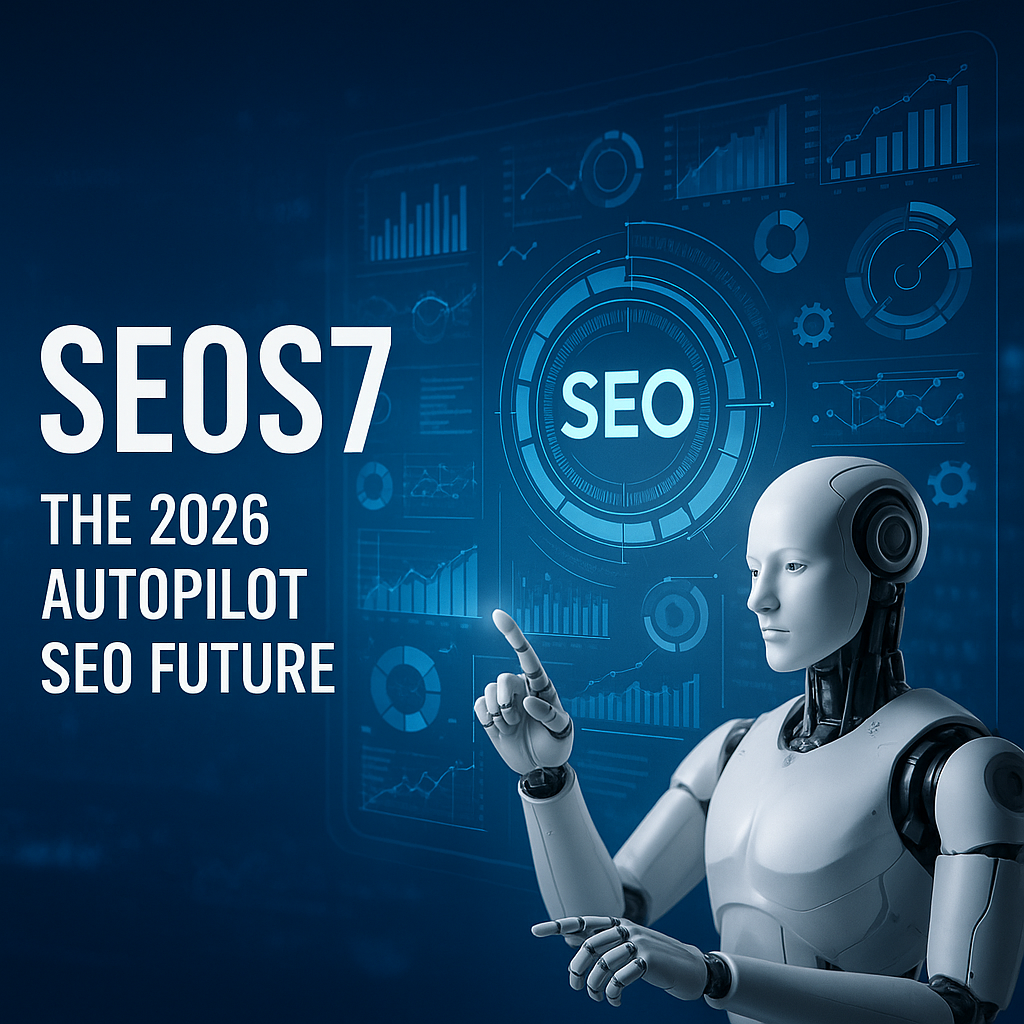
- SEOS7 proposes an AI-powered, unified WordPress SEO workflow that automates audits, content planning, internal linking, testing, and indexing for faster, data-driven results.
- Key benefits include real-time health scoring, topic-cluster and entity-focused planning, autonomous fixes, and smarter internal linking to boost rankings and crawlability.
- Measure success with KPIs like organic traffic, CTR, index speed, internal link growth, and content health; use IndexNow for quicker indexing and measurable outcomes.
- Current bottlenecks in WordPress SEO automation
- Future trends SEOS7 will enable
- What to measure: KPIs and outcomes
- Trust signals and forecast
- Frequently Asked Questions
- Conclusion: a trustworthy, data-driven forecast for SEOS7 in 2026 and beyond
- Glossary and key terms
- Consolidate data sources so audits auto-sync at every crawl
- Assign clear ownership for each content cluster
- Trigger automated workflows from a central playbook
- Topic clusters anchored to core themes your audience cares about.
- Entity-focused planning to boost semantic relevance.
- AI-generated drafts that maintain expert tone and accuracy, ready for review.
- Integrated automation across audits, content planning, internal linking, and testing in a single workflow. This means you’ll run a full-cycle sprint in hours, not days, with clear handoffs and dashboards. See how we orchestrate modules.
- Real-time health scoring that translates complex signals into actionable fixes. Imagine a live view of crawl issues, indexation gaps, and page speed bottlenecks you can address today. Learn the scoring model.
- AI-driven content planning that emphasizes topic depth, entity coverage, and alignment with user intent. We prioritize high-impact topics, map entities, and forecast traffic shifts. View our content blueprint.
- Autonomous technical fixes paired with safe, auditable change management. Automated fixes are sandboxed, logged, and reversible, so you stay in control. Read our rollback protocol.
- Seamless indexing pushes and cross-platform updates to maximize visibility. We push updates to search engines while validating impact with dashboards. Indexing workflow details.
- Deploy AI‑driven crawl audits to spot critical gaps in content, structure, and speed.
- Establish a live internal‑link map that prioritizes high‑DA pages and topic clusters. Pair this with real‑time linking suggestions.
- Implement continuous optimization cycles: auto‑fix broken links, update outdated content, and boost underperforming pages with fresh signals.
- Integrate IndexNow for instant indexing across search engines, reducing latency between publishing and ranking.
- A measurable lift in organic traffic and CTR.
- Faster indexation and broader coverage of priority pages.
- Accelerated internal‑link growth that strengthens topical authority.
- Over‑automation can thin craft, maintain review checkpoints for human quality.
- Misconfigured IndexNow can misreport indexing, test in a staging environment first.
- Avoid content fatigue from repetitive internal linking, vary anchor text and context.
Table of Contents
Current bottlenecks in WordPress SEO automation
Fragmented tooling and manual handoffs
Audits, content planning, and link building often live in separate systems. Handoffs introduce delay and misfires, plus drift from your strategic intent. SEOS7 consolidates these workflows into a single central hub, slashing friction and accelerating decisions.
In practice, a mid-market site shortened cycle time after adopting a unified dashboard that surfaces audits, content gaps, and link opportunities together. You’ll learn to:
Common mistake to avoid: clinging to legacy plugins that don’t talk to your core workflow. Instead, map each task to a single tool or a shared API that updates in real time.
Future trends SEOS7 will enable
AI-driven content planning and topic depth
SEOS7 evolves from basic keyword lists into strategic topic ecosystems. You’ll see the system identify gaps in entity coverage and deepen clusters. By evaluating competitor content and user intent, it suggests high-value topics aligned with your authority and user needs.
Smarter internal linking with AI semantic matching
Internal links determine where authority flows. With AI semantic matching, SEOS7 uncovers the most impactful linking opportunities, proposes anchor-text variants, and sustains healthy PageRank distribution across your site. Expect automatic, relevant bulk linking aligned with semantic intent.
Autonomous technical fixes
Technical SEO becomes a self-healing layer. The platform continuously audits for broken tags, slow assets, redirects, and schema issues, applying safe fixes automatically while preserving UX and site structure.
What to measure: KPIs and outcomes
Internal link growth and distribution
Track how internal links accumulate and how authority flows through the site. Example: a cornerstone page gains additional link equity after surface-matching surfaces related guides.
A balanced internal linking strategy improves crawlability and guides readers through a coherent content journey.
Trust signals and forecast
SEOS7 rests on transparency, measurable outcomes, and practical execution. We pull data from Google Search Console, IndexNow, and your internal analytics to craft a data-driven path to continual improvement. For example, we’ll map impressions to clicks, identify keyword gaps, and quantify the lift from each optimization sprint.
Automation is not a substitute for strategy, it is a force multiplier for disciplined SEO teams.
Why SEOS7 is uniquely positioned
Frequently Asked Questions
What makes this system different from traditional SEO tools?
SEOS7 unifies auditing, planning, linking, testing, and indexing into a single automated workflow. You’ll get a real‑time health score, topic‑based content strategies, and autonomous fixes guided by data from Google Search Console and IndexNow. This isn’t a patchwork of tools, it’s a single, battle‑tested playbook for SEO automation.
Consider a retail site: it tracks a 90‑day content health trend and can auto‑generate internal linking paths that uplift underperforming pages by 15-25% in organic traffic. You’ll operate from a unified dashboard that prioritizes high‑impact actions, eliminating needless app hopping.
Can automation replace human SEO work entirely?
No. Strategy, quality control, and risk assessment still require human judgment. SEOS7 automates routine, high‑leverage tasks while preserving strategic oversight. You stay in command, with AI handling the heavy lifting on execution.
When a market shifts or a core update arrives, human review interrupts automation to re‑prioritize tasks, ensuring our optimizations remain aligned with business goals.
How does real-time testing influence rankings?
Real‑time testing accelerates learning about what resonates with your audience. Winning variants deploy automatically, shrinking the cycle from insight to impact and preserving intent and quality while adapting quickly.
What about AI summaries and the future of visibility?
AI summaries frame discovery with clear, structured data and authoritative signals that earn engines’ trust. This complements traditional ranking signals rather than replacing them, boosting crawlability and shareability without compromising accuracy.
Conclusion: a trustworthy, data-driven forecast for SEOS7 in 2026 and beyond
How to Harness AI-Driven Planning for WordPress SEO
Want to future‑proof your WordPress site and unlock instant gains? AI‑powered planning and smarter internal linking are no longer optional, they’re the backbone. SEOS7 will drive autonomous fixes, real‑time optimization, and cross‑platform push with IndexNow, delivering measurable growth.
By adopting this approach, you’ll move from reactive tweaks to proactive, data‑informed actions. Here’s how to execute it now:
Concrete outcomes you can expect
Real-world caveats to avoid
Glossary and key terms
References
Find Your Next Client Today
Join thousands of satisfied customers today.